
CSIR-CLRI Hands Over Green Leather Technology to Industry
LW Desk
CSIR-CLRI transferred a patented technology to industry that converts tannery chrome shavings into reusable leather processing chemicals, cutting wastewater pollution by up to 50%. Already tested at a 1,500 kg scale, the eco-friendly process is now ready for commercial licensing.
The Council of Scientific and Industrial Research (CSIR) transferred a new eco-friendly leather processing technology to industry this week, aimed at cutting down harmful waste from tanneries.
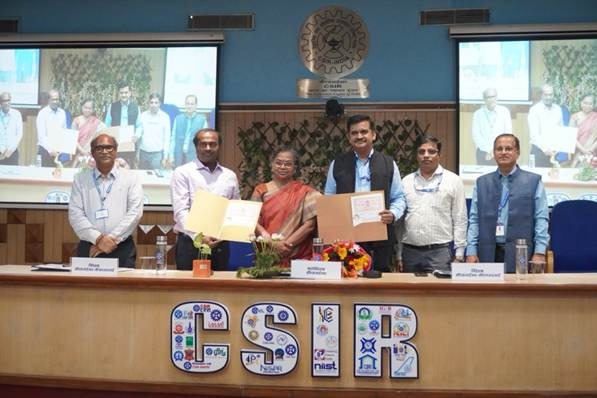
The technology was developed by CSIR-Central Leather Research Institute (CSIR-CLRI) in Chennai and was officially handed over at an event held at CSIR Headquarters in New Delhi. Dr. N. Kalaiselvi, who heads the Department of Scientific and Industrial Research and also serves as CSIR's Director General, addressed the gathering, along with the Director of CSIR-CLRI.
Turning Tannery Waste into Useful Material
The leather industry produces a waste called chrome shavings, solid leftovers that don't break down naturally but contain a valuable protein called collagen, which usually goes to waste. CSIR-CLRI scientists have developed a process to extract this protein and convert it into reusable chemicals known as syntans, which can be used again in leather retanning.
The technology has already been tested at a fairly large scale at a 1,500 kg scale, after starting out at a smaller 100–200 kg pilot stage. According to CSIR-CLRI, using this process can cut harmful pollution (measured as total dissolved solids) in tannery wastewater by up to 50 per cent. The technology is patented and is now ready for companies to license and adopt commercially.
A Step Towards Cleaner Manufacturing
Speaking at the event, Dr. Kalaiselvi stressed the need to move lab research into real world industrial use more quickly, so that scientific work leads to genuine environmental and economic benefits. She also called for stronger collaboration between CSIR laboratories and private companies to help such homegrown technologies reach a wider audience.
The transfer is part of CSIR's ongoing effort to support sustainable practices in Indian industry, helping tanneries reduce pollution while making better use of what would otherwise be wasted material.