
Kenya Sets Three Year Target to Expand Footwear and Leather Production
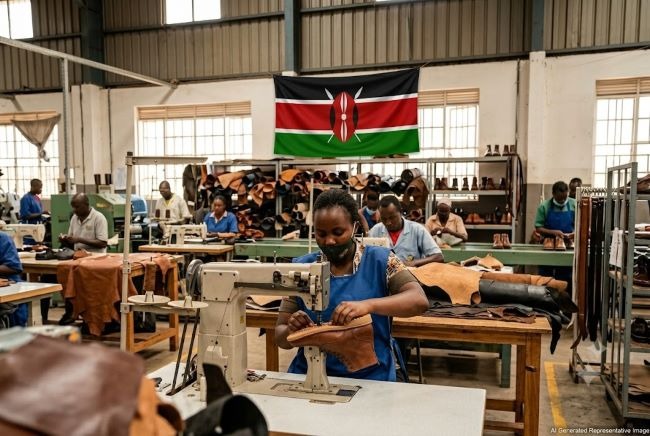
Kenya aims to expand footwear and leather manufacturing, increase domestic leather use and reduce shoe imports within three years under President William Ruto’s industry development plans.
LW Desk
Kenya plans to expand its footwear manufacturing capacity with the aim of ending shoe imports within the next two to three years, President William Ruto said at an event in Nairobi on October 8, 2026.
Speaking at Jamhuri Park, Ruto said the government was working to increase the use of Kenyan leather in domestic manufacturing and strengthen local production of footwear and other leather goods.
“I want to assure you that, in a very short time, in the next two to three years, we will not be importing shoes from anywhere; we will be making shoes here in Kenya and all these leather products,” he said.
Ruto said eight companies were already using Kenyan leather and called on manufacturers to improve product quality as the country seeks to expand its presence in the domestic footwear market.
Security Footwear Production
The president cited locally manufactured boots for security agencies as an example of domestic production. He said the government had directed three years ago that boots for the military and police should be manufactured in Kenya rather than imported from China or other countries.
According to Ruto, the boots are now being produced locally, reflecting the development of manufacturing capacity in this segment.
Leather Industry Development Targets
Kenya's wider leather industry strategy focuses on increasing domestic processing and shifting exports from raw and semi-processed hides and skins towards finished leather and manufactured products.
Targets announced in 2024 include increasing annual revenue from the leather subsector from Ksh15 billion to Ksh120 billion, expanding employment from 17,000 to 100,000 jobs, and raising annual footwear production from eight million to 36 million pairs by 2027.
The government has allocated Ksh400 million to upgrade the Ewaso Ng’iro South Development Authority leather factory. The allocation covers modern equipment, a footwear plant and facilities for hides and skins.
Construction of the Kenya Leather Industrial Park at Kenanie in Machakos County was reported to be 85% complete. The project includes two tanneries, two leather manufacturing plants and a common effluent treatment plant, with additional land designated for private investors.
Other measures include training 703 flayers and supplying subsidised flaying equipment to 680 slaughter points to improve hide and skin quality.
The proposed expansion is intended to strengthen domestic value addition, increase manufacturing employment and reduce reliance on imported footwear. Meeting the import replacement target will depend on production capacity, raw material availability, product quality and the ability of local manufacturers to compete on price.