Turning Tannery Waste into Opportunity: Inside HUAIXI's Recycled Leather Machinery
LW Desk
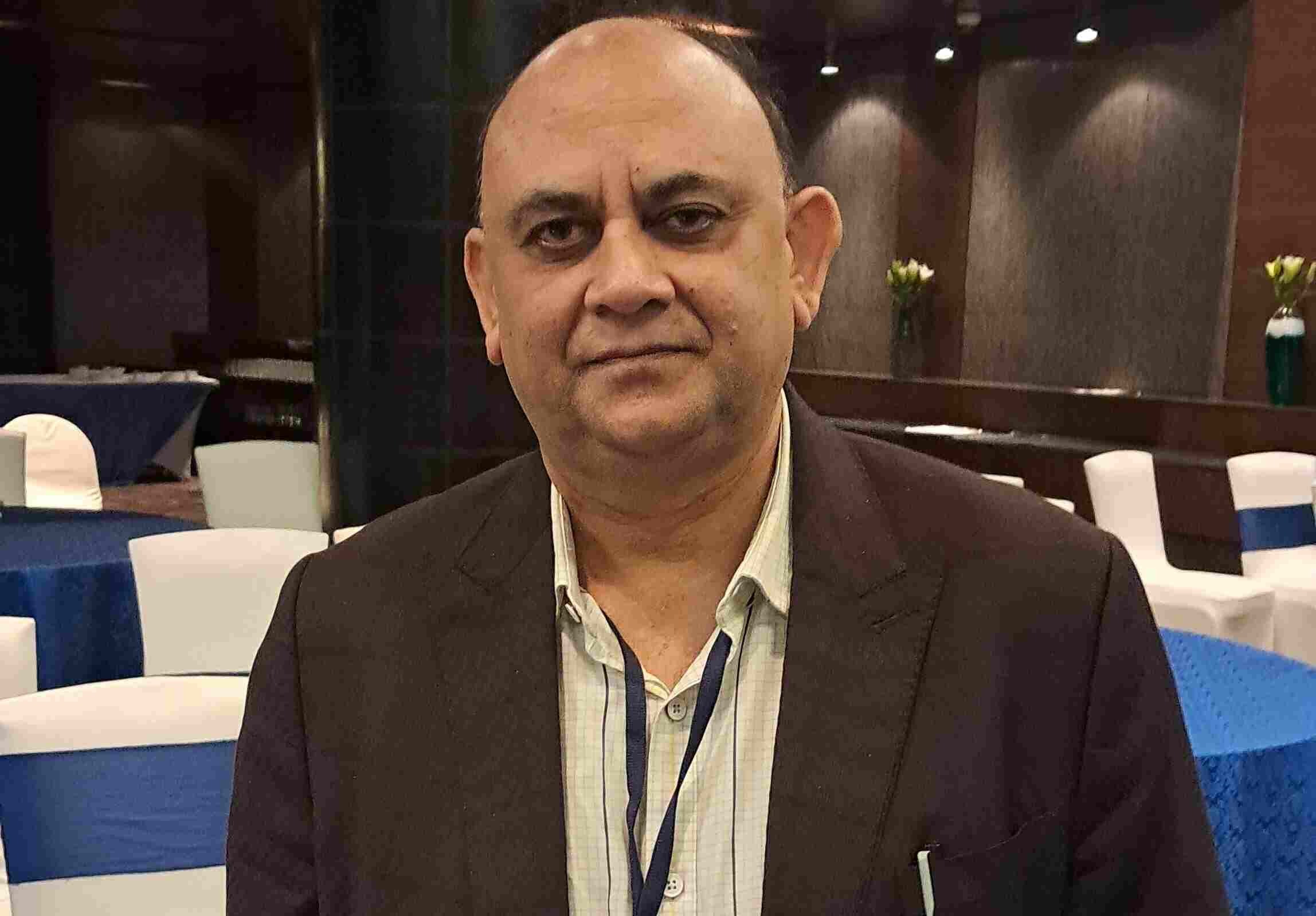
Qinyang HUAIXI Machinery Co., Ltd. builds complete recycled leather production lines that turn tannery scraps, offcuts and buffing dust into usable sheet material. David Zhang, the company's International Business Manager, explains how the machinery, energy design and after-sales support are tailored project by project.
Waste to Opportunity
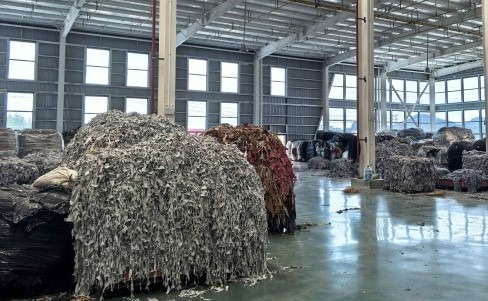
Tanneries and leather goods factories worldwide generate a steady stream of scraps, trimmings, shaving dust and other processing waste. For years, many factories have treated this material as a disposal problem rather than a resource. Qinyang HUAIXI Machinery Co., Ltd., a Henan, China based manufacturer of recycled leather equipment, leather waste recycling systems and complete production line solutions, is working to change that thinking. According to David Zhang, International Business Manager at HUAIXI, the real commercial question factories should be asking isn't just "how do we dispose of leather waste," but "how can we create new value from materials that already exist on our own floor?"
HUAIXI's approach is built around factory scale production rather than environmental messaging alone. The company helps customers evaluate their raw materials, select the right equipment, and design practical processing routes for leather scraps, split leather offcuts, buffing dust and related fiber waste. According to Zhang, no fixed setup fits every factory. Each project starts by checking the material, its type, moisture, condition, chemical makeup and contamination, before the process is built around the product needed, output level and local utilities.
How the Machinery Works
A typical recycled leather line follows eight connected stages, and HUAIXI designs its equipment around keeping this flow stable and consistent at industrial scale:
1. Leather Scraps – Split leather offcuts, trimmings and leather waste enter the line.
2. Sorting – Scraps are separated by type and quality.
3. Crushing – Large leather waste pieces are cut down into smaller pieces.
4. Fiber Opening – Leather pieces are opened into usable fiber.
5. Mixing – Leather fiber is combined with water, binder and additives.
6. Wet Forming – The fiber mixture is formed into a continuous sheet.
7. Drying – Sheet moisture and structure are stabilized.
8. Cutting/Winding – The line produces finished recycled leather sheets or rolls.
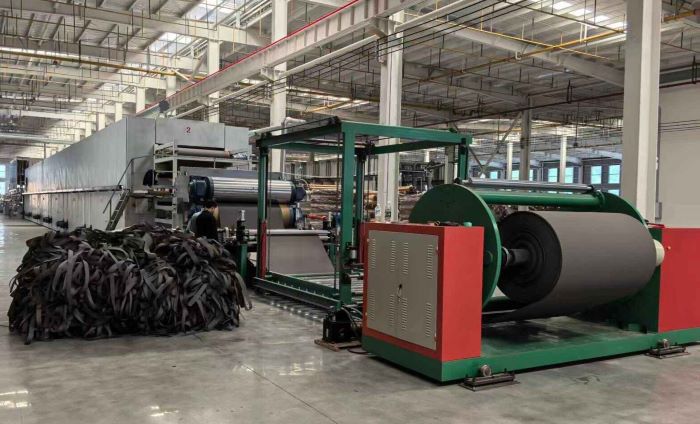
Zhang notes that the biggest challenges at industrial scale aren't any single machine, but stable feeding, controlled fiber opening, dust handling, consistent sheet formation, and smooth connection between each stage. HUAIXI's core equipment line-up: primary crusher, fiber-opening machine, mixing and forming units, pressing, drying, calendaring, cutting and winding, is built to work as one continuous system rather than isolated machines.
Matching the Machine to the Material
Different waste types, Zhang explains, need different treatment within that system. Thicker offcuts usually require crushing and fiber opening first, while fine buffing dust can often skip straight to mixing. Moisture content and fiber structure affect settings, speed and output, and unusually wet or contaminated material may need extra pretreatment. The final configuration always comes from material testing and sample trials rather than a fixed formula.
Similarly, energy design follows the same customized logic. HUAIXI separates two stages that are often confused: the drying oven, which removes moisture from the formed sheet, and the steam-heated calender, which flattens and finishes it afterward. Because energy use depends on moisture level, machine width, production speed and each factory's own utilities, Zhang says HUAIXI avoids quoting a single universal energy-saving figure. Instead, every project looks at insulation, steam control, drying-load optimization, and possible integration with heat-recovery systems the factory already has.
Where the Output Goes
On the output side, recycled leather from HUAIXI's lines can be developed with different colors, textures and surface effects for footwear materials, bags, belts, furniture, stationery, garment accessories and other leather-related products. Zhang points out that there's no single best application for every market, returns depend on raw material and disposal costs, production scale, specifications and how easy the final product is to sell. Footwear components such as insoles and linings are often a practical starting point where buyers and specifications already exist, while recycled sheet material can move into bags, belts and furniture applications depending on formulation and finishing.
Project Support
After-sales support follows the same project-specific model. HUAIXI's packages can include installation guidance, commissioning support, maintenance documentation, operator training, remote troubleshooting and spare parts, with engineers available on-site for larger jobs, tailored to each customer's actual line configuration and factory location.
HUAIXI's project and service experience spans China and overseas markets including Bangladesh and Turkey, with references covering customer visits, equipment discussion, installation preparation and ongoing production-line communication. That track record, paired with the emphasis on testing over guesswork, reflects the company's broader philosophy: the most successful recycling projects are the ones that connect a steady, available waste stream with a market the customer can already reach.